Bearded Sugar Skull
A Bold Calavera That Demands Attention—And Delivers
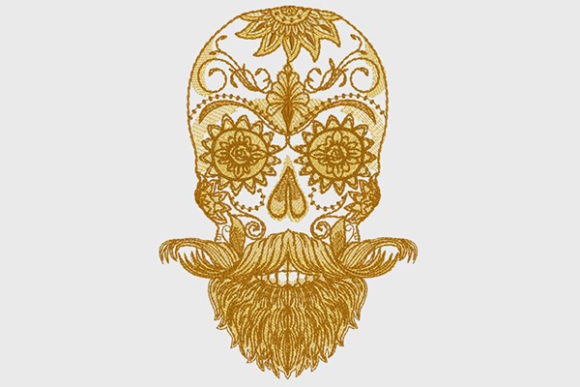
First impression? This isn’t just another sugar skull—it’s a character. The Bearded Sugar Skull lands with confident, almost theatrical presence: large-scale, highly stylized, and dripping with intentional ornamentation. The mustache alone carries personality—thick, curling, and richly textured in satin stitch. It leans into Mexican folk art tradition without leaning on cliché; the symmetry feels ceremonial, the line work crisp but warm, and the ornamental flourishes (think floral motifs framing the temples and cheekbones) are dense enough to read beautifully at 4–5 inches tall—but not so tight they’ll gum up on lightweight fabric.
Where It Shines: Real Projects, Real Impact
I tested Bearded Sugar Skull as the centerpiece for a limited-run embroidered tote bag series—cotton canvas, medium-weight, natural off-white. Stitched at 4.75", it anchored the design perfectly: legible from across a craft fair booth, rich in texture, and unmistakably handmade. Customers paused, smiled, asked about the meaning—and that’s the quiet power of this machine embroidery design. It sparks conversation without needing explanation.
It works exceptionally well on:
- Sweatshirt embroidery—especially on crewnecks or hoodies where the bold shape reads clearly against relaxed fabric drape;
- Embroidered patches—its clean outer edge and balanced negative space make it ideal for heat-applied or sew-on versions;
- Aprons and tea towels—the visual weight holds up next to kitchen textures, and the theme adds warmth without kitsch;
- Baby embroidery—on organic cotton onesies or burp cloths, scaled down to 3", it reads sweetly whimsical rather than edgy;
- Holiday embroidery—perfect for Day of the Dead-themed gift sets, boutique packaging, or even wedding favors for culturally rooted celebrations.
As an Etsy seller, I’d list this as both a digital embroidery file and a finished product option (e.g., “hand-embroidered linen pillow cover with Bearded Sugar Skull”). Its strong visual identity helps with branding consistency—no need for extra text or logos to sell the vibe.
Where to Proceed Thoughtfully
This is not a “set-and-forget” embroidery file. Its ornate nature means real-world execution needs attention. On thin fabric like rayon challis or lightweight voile, the fill stitch density can cause puckering—even with light cutaway stabilizer. I recommend testing on scrap first, especially if pairing with stretchy fabric like jersey knits: the rigid geometry of the skull doesn’t forgive distortion.
For curved surfaces like caps or beanies, scale down to 3.25" max and verify hoop clearance—the upper cheekbone and crown details sit high and may snag during hooping. And while the design looks striking on dark fabric, keep thread color contrast in mind: white or metallic silver thread pops, but pale pastels can disappear in shadowed recesses.
Avoid cramming Bearded Sugar Skull into small hoop sizes (<4"). The delicate filigree around the eyes and mouth loses definition below 3.5", and tiny lettering isn’t part of this design—so don’t try to add names or dates inside the skull unless you’re layering a separate, simplified monogram file.
What It Does for Your Handmade Product—and Your Customer
When stitched cleanly, Bearded Sugar Skull elevates perceived value instantly. Buyers recognize craftsmanship—not just because it’s detailed, but because the balance of satin, fill, and running stitch feels intentional. That matters for personalized gifts: a custom sweatshirt with this design reads as curated, not mass-produced. For small shop products, it reinforces authenticity—especially if your brand celebrates cultural themes with respect and joy.
It also builds trust. Customers scrolling Etsy or browsing a boutique notice when embroidery has breathing room and clarity. Overcrowded stitches or muddy corners erode confidence in quality. Bearded Sugar Skull avoids that trap: its layout leaves strategic gaps—between petals, along the jawline, behind the ear—that let fabric show through and prevent stiffness. That translates directly to comfort on apparel and durability through washes.
Designer Notes You’ll Actually Use
Before stitching your first Bearded Sugar Skull:
- Test on scrap fabric—same weight, same weave, same stabilizer combo you’ll use for production;
- Check thread color contrast on both light and dark backgrounds using a simple printable mockup;
- Review stitch density visually in your embroidery software—look for overlapping fill areas near the nose bridge and temples;
- Confirm hoop size: this design benefits from at least a 5" x 7" hoop to avoid re-hooping mid-stitch;
- Inspect small details at 200% zoom—especially the curl tips of the mustache and inner petal edges;
- Use proper stabilizer: medium tear-away for stable wovens, cutaway for knits or stretchy blends;
- Verify licensing before selling finished items or bundling this as part of a commercial embroidery kit—this is a digital embroidery file meant for real-world use, but rights matter;
- Try black-and-white mockups first—if it reads strongly in grayscale, it’ll hold up under varied lighting and fabric tones.
Final Thought: Not Just a Design—A Conversation Starter
Bearded Sugar Skull doesn’t just decorate—it connects. Whether stitched onto a baby’s onesie, a chef’s apron, or a boutique tote, it carries warmth, wit, and cultural resonance. As a designer and embroidery product reviewer, I don’t reach for this file when I need safe or subtle. I reach for it when I want something memorable, well-structured, and deeply human. It fits right into the rhythm of thoughtful making: equal parts craft, care, and character.