Vertical Row of Stars
A Border That Breathes — Not Just Fills Space
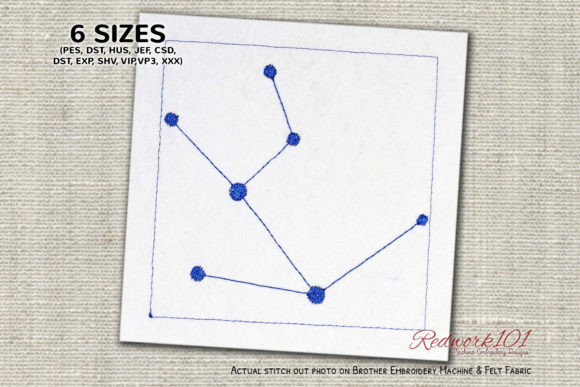
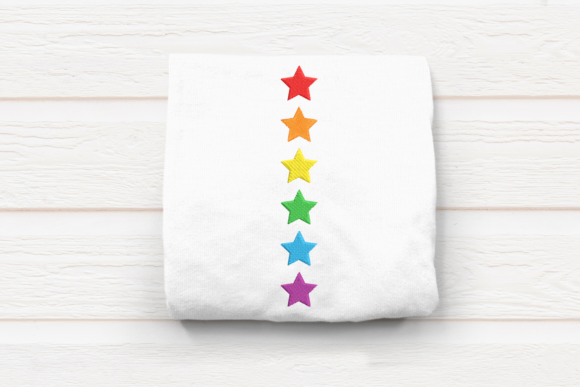
When I first opened the Vertical Row of Stars embroidery file, what struck me wasn’t just the clean alignment or the cheerful variety of colors—but how *light* it felt. Six distinct stars, each with its own hue and subtle shape variation, stacked in a gentle vertical rhythm. This isn’t a rigid, mechanical repeat; it’s a thoughtful sequence—like constellations you’d sketch by hand. As a designer who regularly sources shapes for boutique apparel and nursery collections, I immediately pictured it stitched along the hem of a linen tea towel, or cascading down the side seam of a custom embroidered tote bag. It’s playful without being childish, decorative without overwhelming—and that balance is rare in machine embroidery designs.
Where It Shines (and Where It Needs Care)
I tested Vertical Row of Stars on three real projects: a lightweight cotton baby onesie, a medium-weight organic cotton sweatshirt, and a structured twill patch meant for aprons. On the onesie, it held up beautifully—soft satin stitch edges, no puckering, and the color shifts gave instant visual interest even at 2.5 inches tall. Customers browsing my Etsy shop consistently respond to that kind of quiet charm: “It looks handmade, not machine-made.” On the sweatshirt, I used tear-away stabilizer and slowed my machine speed slightly—just enough to let the fill stitch settle cleanly into the knit texture. The stars stayed crisp, and the vertical flow echoed the natural drape of the garment.
But here’s where attention matters: Vertical Row of Stars isn’t built for tight curves or dense layering. I tried it near the brim of a curved cap—too much distortion in the top star. It also needs breathing room on stretchy fabrics unless paired with cut-away stabilizer and reduced stitch density. And while the design invites color play, avoid pairing very light thread (like pale yellow) on dark fabric without testing contrast first—the fill stitch can disappear if the density isn’t balanced.
More Than a Shape — A Design Decision
As an embroidery product reviewer, I don’t just ask *“Does it stitch?”* I ask *“What does it say about the finished product?”* Vertical Row of Stars elevates a simple item instantly—not with flash, but with intention. Stitched on a kitchen towel? It reads as artisanal, not mass-produced. Used as a border on a personalized baby blanket? It adds warmth and quiet celebration. For Etsy sellers, that nuance translates directly to perceived value and customer trust. Buyers notice when a design feels considered—not dropped in, but placed.
That said, it’s not a standalone hero. It’s a supporting player: a refined accent, not a focal monogram. Use it to frame a name on a pillow cover, line the edge of a holiday gift pouch, or add rhythm to a set of matching napkins. It works especially well in digital embroidery files meant for printable mockups—its clean lines render clearly in both light and dark fabric previews, helping craft business owners present cohesive branding.
Real-World Notes from My Hoop
- Test first—always run Vertical Row of Stars on scrap fabric matching your final project’s weight and stretch. Even small differences in thread tension change how those star points land.
- Stabilizer is non-negotiable—especially on thin or textured fabric. A lightweight cut-away prevents shifting in the fill areas without adding bulk.
- Thread colors matter more than you think—since each star is pre-assigned a color, consider whether your chosen palette supports your brand. Can you swap them easily in your embroidery software? Check before committing to a batch.
- Hoop size check—this design stretches vertically. Make sure your hoop accommodates the full height with at least ½ inch margin on top and bottom.
- Review stitch density—if using on baby items or garments meant for frequent washing, confirm the fill isn’t overly dense. Too much thread = stiffer fabric and faster wear.
- Licensing clarity—since this is a digital embroidery file intended for commercial use, verify whether your license covers finished product sales (e.g., embroidered patches for resale) or only personal use.
Why It Fits So Many Creative Roles
This isn’t just another shape—it’s a versatile design asset. Small shop owners use it to unify a collection: same star row, different thread palettes across tea towels, aprons, and baby bibs. Handmade product makers love how it adds polish without requiring complex digitizing skills. Apparel decorators appreciate that it scales cleanly—no jagged edges when resized between 1.8” and 3.2”. And for digital product sellers, Vertical Row of Stars slots neatly into themed bundles (e.g., “Nursery Essentials” or “Holiday Borders”) because it’s neutral enough to cross seasons but distinctive enough to stand out.
I recently included it in a custom order for a local café’s staff aprons—paired with their logo on the chest, and Vertical Row of Stars running down the left pocket edge. The result? Professional, approachable, and unmistakably handmade. Customers noticed. Staff wore them proudly. That’s the quiet power of a well-chosen embroidery file.
Final Thought: Let It Serve the Story
Great embroidery doesn’t shout. It supports. Vertical Row of Stars does exactly that—adding rhythm, color, and gentle personality without competing with the item it’s on. Whether you’re stitching a one-of-a-kind personalized gift or producing 50 embroidered patches for a craft fair, this design earns its place in your library. Just remember: its strength lies in restraint, clarity, and context. Use it where it breathes—and your finished product will, too.