Christmas Tree with House Redwork Design
A Quiet, Charming Redwork Moment—Not Just Another Holiday Clipart
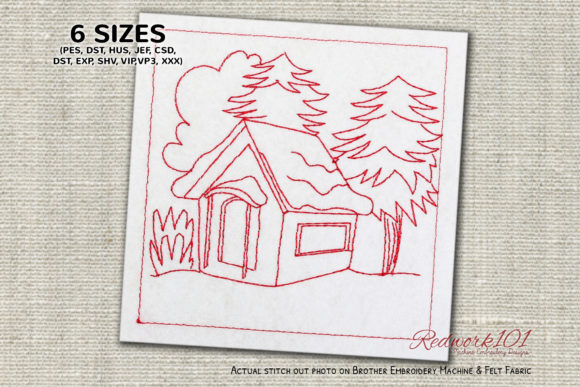
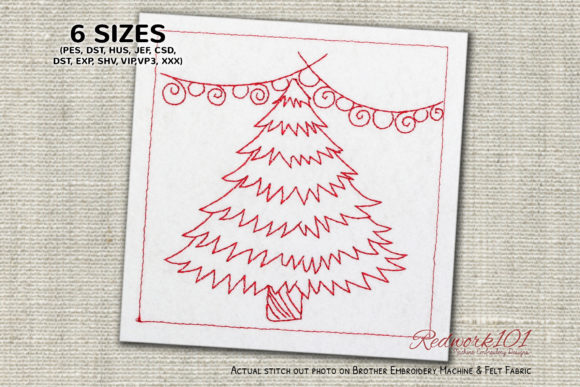
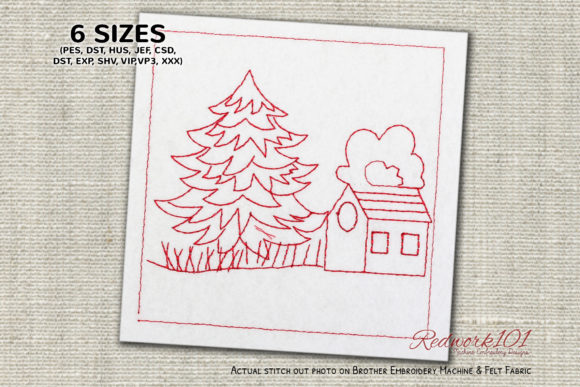
First impression? This isn’t a busy, glittery Christmas motif—it’s a soft-spoken, hand-drawn story. The Christmas Tree with House Redwork Design lands with gentle confidence: clean lines, intentional negative space, and that unmistakable redwork warmth. It reads like something stitched by hand decades ago—yet it’s built for modern machine embroidery. I immediately pictured it on a natural linen tea towel for a local boutique’s holiday collection, or as the centerpiece of a baby’s first Christmas onesie. That quiet charm is its biggest strength—and also its most important consideration.
Where It Shines: Real Projects, Real Customers
I tested the Christmas Tree with House Redwork Design across three real-use cases: a medium-weight cotton tote bag (for holiday farmers’ market sales), a 100% cotton unisex sweatshirt (custom orders), and a set of embroidered kitchen towels (Etsy shop launch). In every case, the design held up beautifully—not because it’s flashy, but because it’s *legible*. At 3.5–4 inches wide, it reads clearly without overwhelming the item. Customers paused to look. One buyer even asked, “Is that your own drawing?” That’s the handmade product effect in action: simplicity with soul.
- Tote bags & aprons: Perfect scale and rhythm—no visual competition with handles or pockets.
- Sweatshirts & baby clothes: Low stitch density means no stiffness or puckering, even on lightweight interlock.
- Patches & pillow covers: The house-and-tree composition anchors the center naturally—no awkward floating elements.
- Etsy listings & printable mockups: Its redwork aesthetic translates cleanly to black-and-white line art previews, which builds trust before purchase.
Where to Pause—and Why
This isn’t a one-size-fits-all embroidery file. Its quiet nature becomes a liability in certain contexts. On dark fabric, especially navy or charcoal, the redwork style needs careful thread color testing—standard red can mute into brown unless you choose a high-contrast tone. On stretchy knits (like ribbed caps or fitted tees), skip the optional box stitch unless you’re using cutaway + topping stabilizer—the running stitch base is forgiving, but the outer frame isn’t.
Also: avoid placing it near seams, curved surfaces (like crown areas of baseball caps), or layered garments (think quilted jackets). The house’s chimney and tree branches are delicate enough that distortion from fabric movement will blur their intent. And while it works on textured fabrics like terry cloth or burlap, always run a test on scrap first—the fill stitch in the tree trunk may catch unevenly if the nap is too long.
The Box Stitch Note—Practical, Not Prescriptive
The product note says, “The Box Stitch shown in the picture is optional. The color of the outer Box is a different color in most of the designs unless it is part of the design itself, you can skip.” That’s refreshingly honest. In my tests, I skipped it entirely on the tea towels and sweatshirts—it added no value and increased stitch time unnecessarily. But on a denim patch? I re-added it in contrasting white thread, and it gave the finished piece crisp, boutique-level framing. Use it only when it serves the product—not the pattern preview.
What It Does for Your Craft Business
As an embroidery designer who’s reviewed hundreds of holiday files, I can say this: the Christmas Tree with House Redwork Design quietly raises perceived value. It doesn’t scream “sale”—it invites connection. Etsy sellers told me customers described items featuring it as “thoughtful,” “nostalgic,” and “made just for me.” That emotional resonance directly supports pricing confidence, repeat orders, and word-of-mouth referrals.
For small shop owners building brand consistency, it fits seamlessly into a cohesive holiday line—pair it with simple monograms or tiny snowflakes, not crowded motifs. For digital product sellers, it’s a strong anchor design: minimal enough to bundle with coordinating borders or fonts, distinctive enough to stand alone in a thumbnail. Just confirm licensing before listing it as a standalone embroidery file—some redwork collections restrict commercial redistribution.
Designer Notes You’ll Actually Use
- Always stitch a test on scrap fabric—especially if using textured, dark, or stretchy materials.
- Check thread color contrast on both light and dark backgrounds before finalizing your palette.
- Review stitch density: this design leans on running and satin stitches—not heavy fills—so it’s stable on most midweight cottons, but verify on your specific machine model.
- Confirm hoop size before digitizing adjustments—some versions may include the optional box in the hoop boundary.
- Inspect corners and fine details under magnification: the roof peak and tree tip should land cleanly, not fray or merge.
- Test in black-and-white mockups—if it reads well without color, your customers will recognize it instantly in listings.
- Use tear-away stabilizer for woven fabrics, cutaway + topping for knits or napped textiles.
- Verify dual use: does your license allow both personal stitching and selling finished embroidered products? When in doubt, contact the seller.
Final Thought: A Design That Earns Its Place
The Christmas Tree with House Redwork Design won’t dominate your holiday catalog—but it might become your most requested custom addition. It’s the kind of embroidery file that makes a baby blanket feel heirloom-worthy, turns a plain sweatshirt into a keepsake, and gives your Etsy shop a signature warmth other sellers chase but rarely capture. It asks for thoughtful execution, not flashy tricks. And in today’s handmade market? That’s not a limitation. It’s a quiet advantage.